Love Our Culture. Love Our Roots.
We believe that every Indian carries the same indigenous Indian DNA. No matter what a person's current religious faith may be, by our roots, our ancestry, and our blood, we are all one. We are the children of the same ancient soil. There are no divisions in our heritage—there is only one identity: The Only India.
We proudly belong to a city of immense bravery and profound historical roots, originating with the ancient name of Pandori when the early families of the Sanatan Native Indian Civilization resided here.
The Historical Siege
During the era of the Mughal Saltanat, this sacred area was repeatedly targeted, besieged, and brutally affected by foreign incursions.
- From the 7th Century: It was a small, thriving native kasba named Pandori. It was subsequently demolished and altered by Mughal invaders.
- In the 15th Century: The area was systematically redeveloped as Islampur Qazi by Mirza Hadi Baig, who was appointed by Babur as the Qazi. A "Qazi" translates directly to an Islamic judge or magistrate over the region.
- Naming: Driven by religious devotion to his faith rather than the land's history, he named the central village "Islampur Qazi" (The City of Islam of the Judge).
Etymological Shift
- Islampur Qazi Majhi: The region was historically part of the uninhabited "Majha" area of Punjab, famous for its robust buffaloes and cattle (Majh meaning buffalo/bull).
- Qazi Majhi: Over time, the local populace dropped the word "Islampur" for sheer linguistic convenience, simplifying the name to Qazi Majhi.
- Kadi / Qazi: The name was further shortened simply to "Qazi" or "Kadi", referring directly to the seat of the foreign-appointed local judge.
- Qadian: Through natural local Punjabi linguistic shifts, "Qazi" transformed into Qadian, meaning "Town of the Qazis" or jurists.
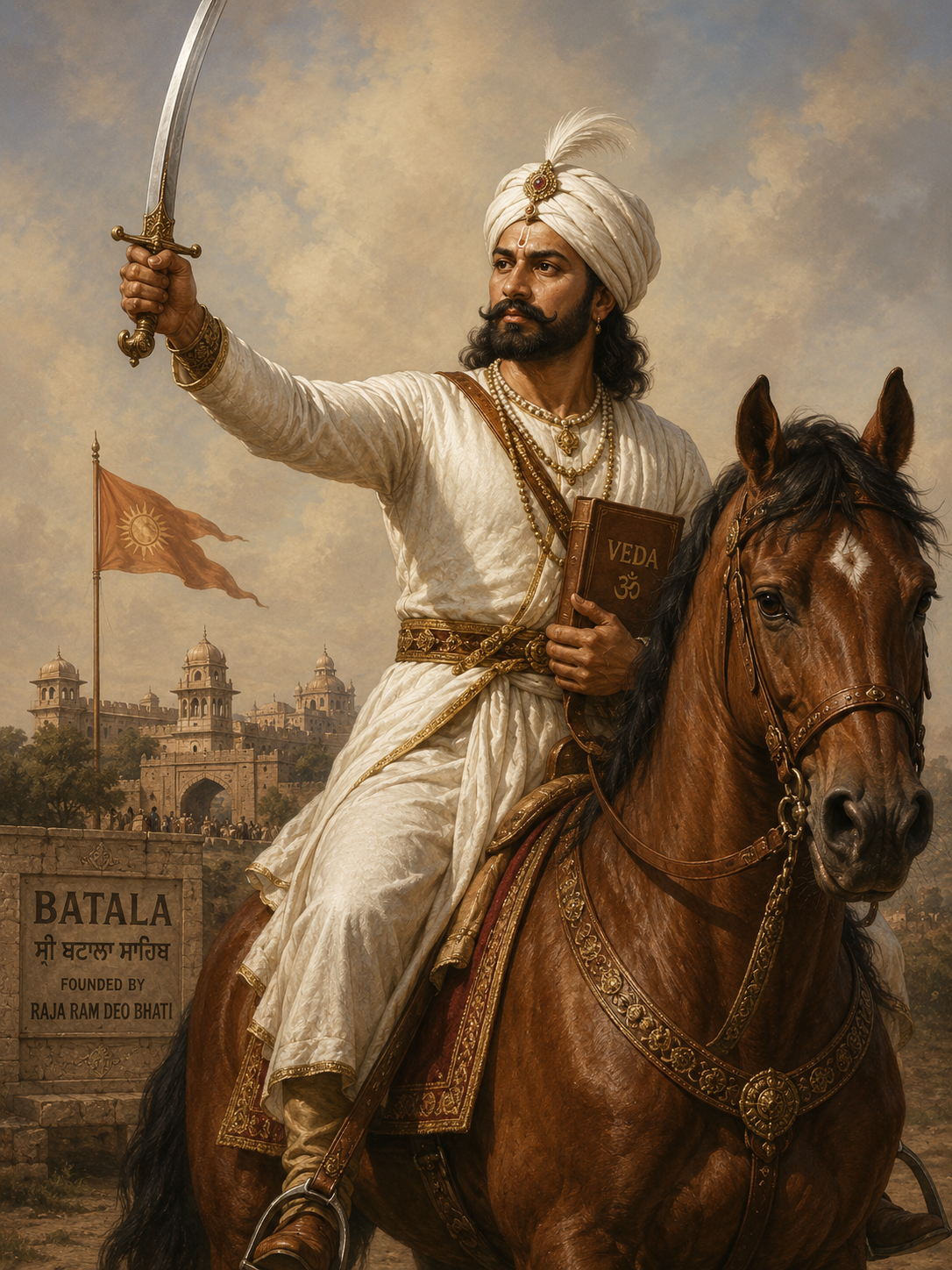
Raja Ram Dev Bhatti
The Founder of Batala & Restorer of Heritage
Raja Ram Dev Bhatti (also known as Ram Deo Bhati), a valiant Bhati Rajput chieftain, is celebrated as the visionary founder of the historic Batala City. As he consolidated lands and established governance in the region, he deeply respected the ancient spiritual geography of the Sanatan Native Indian Civilization.
In the year 1466, Raja Ram Dev Bhatti traveled to Dhapai, a crucial area immediately adjacent to Qadian. Recognizing its ancient spiritual significance, he undertook the massive restoration and repair work of the ancient Vishnu Temple, a majestic structure that proudly stands to this very day.
The Arrival of a Hero
Defending the Roots
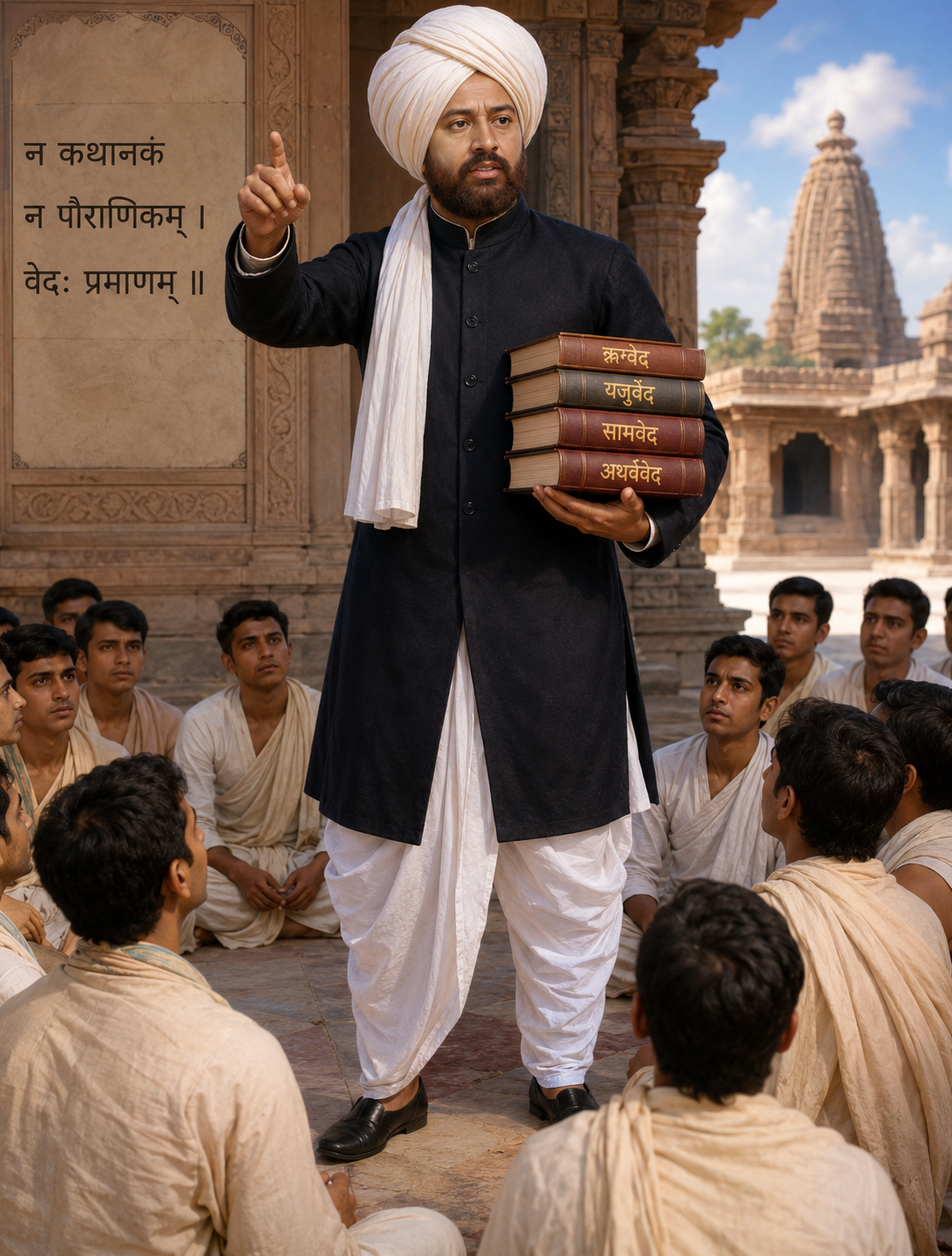
A legendary hero from Jhelum arrived in this region to halt the aggressive campaigns of religious conversion. Pandit Lekh Ram set foot in Qadian on 19 November 1885.
He came to actively challenge the growing foreign ideological influence and to prevent the religious conversion of the local followers of the Sanatan Native Indian Civilization. Armed with deep scriptural knowledge and fearless resolve, he engaged in fierce debates and fought tirelessly to protect the indigenous culture.
He was tragically assassinated later, sacrificing his life on the altar of truth and cultural preservation.
The Historical Conclusion
Pandit Lekhram Nagar (alias Qadian or Pandori) was historically and fundamentally a pure land of the Sanatan Native Indian Civilization. It was systematically demolished, renamed, and demographically altered over centuries by foreign ruling political powers. Today, we remember its true history, honor its heroes, and unite under the unbreakable bond of our shared Indian ancestry.